The Best-Run Fast Casual Chains Are
Consistent by Design
Not by Chance.
Consistency at scale isn’t a culture achievement. It’s an infrastructure achievement. The chains delivering the same food cost, the same guest experience, and the same speed of service across every outlet aren’t doing it through better hiring or stronger management. They designed an operation that makes consistency the default — and variation the exception.
A perspective for operators building durable, scalable fast casual businesses
Growth exposes the cracks that one location could hide.
The operational challenges that fast casual chains face when scaling aren’t new — but they compound faster than most operators expect. Here is what the numbers say.
“Operators estimate that improving execution consistency across existing outlets could increase revenue by an average of 22% — without opening a single new location. The opportunity is already inside the chain. The infrastructure is what unlocks it.”
Already navigating these challenges?
Speak with an operations specialist who works with fast casual chains at your stage of growth.
It’s rarely one problem. It’s five compounding each other.
Most fast casual operators can name their biggest challenge. What they rarely see is how each problem is feeding the others. Here is the pattern we see across chains at every stage of growth.
Operations & Consistency
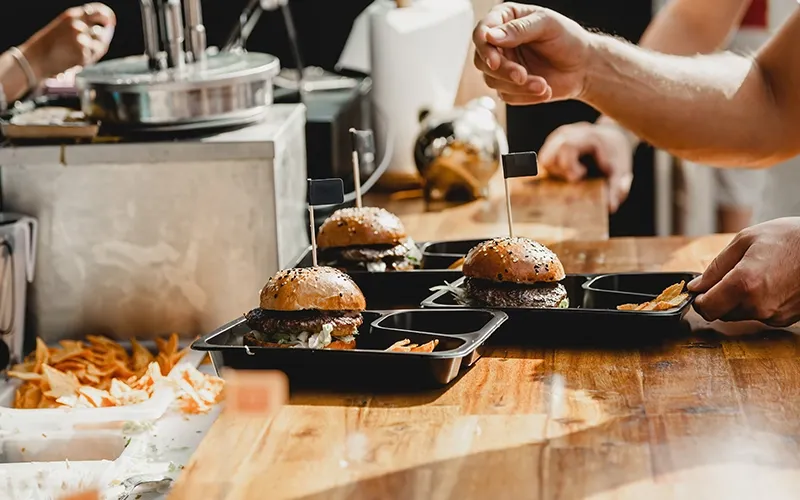
Consistency is the defining promise of a fast casual chain — and the hardest thing to maintain as you scale. When SOPs live in a training manual, compliance depends entirely on the outlet manager on duty. Menu modifiers get applied inconsistently. Portion sizes drift. Speed of service varies by outlet and by shift. None of these are visible from HQ until a customer complaint surfaces or a regional audit reveals it. The operational consistency problem is not a people problem. It is a systems problem. Without a platform that enforces the same workflow at every terminal across every outlet, variation is structurally inevitable.
- Menu and pricing changes take hours to propagate across outlets — during which time different outlets are running different versions
- Outlet-level compliance is audited retrospectively, not monitored in real time
- Training gaps compound at scale: what one manager knows, the next one hired may not
- Void and discount abuse is difficult to detect without role-based access controls and real-time alerts
Inventory & Supply Chain
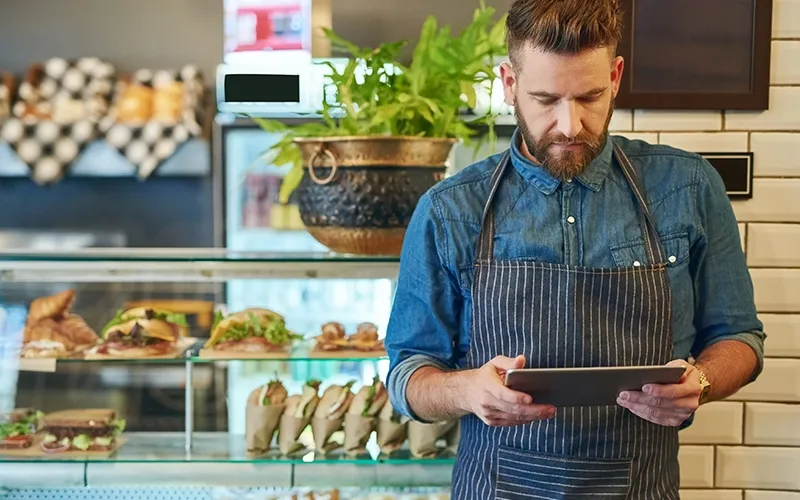
Fast casual operators typically target food cost percentages between 28–32% of revenue. Every point above that target is direct margin erosion. Yet the majority of growing chains are managing inventory through a combination of manual counts, end-of-week exports, and supplier relationships that live in someone’s inbox. At one outlet, the variance is manageable. Across ten or twenty, the cumulative waste, over-ordering, and untracked transfers become a material financial problem — one that often doesn’t appear in the P&L until it’s already significant.
- Stock transfers between outlets go undocumented, creating phantom variances in both sending and receiving locations
- Centralised purchasing requires visibility into live stock levels across all outlets — which manual processes cannot provide
- Recipe costing is either not done or not linked to purchasing, meaning menu pricing is disconnected from actual ingredient cost
- 74% of operators say reducing food costs is a top priority — but fewer than half have the systems to do it
Menu & Pricing Control
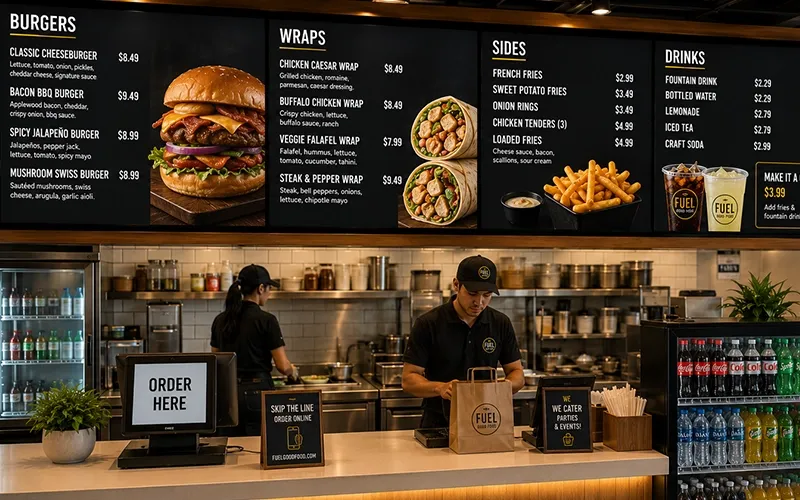
The fast casual menu is a commercial document. It signals value, manages food cost, and determines which items get ordered. At scale, managing that document across outlets, clusters, and aggregator platforms simultaneously is a significant operational overhead — and one that most chains underestimate until they’ve already made it complex. Aggregator menus that fall out of sync with the in-store menu. Regional pricing that doesn’t reflect local ingredient costs. Seasonal item launches that go live on Swiggy but not on the counter POS. These are not edge cases — they are weekly realities for chains without centralised menu control.
- Separate menus maintained for each aggregator platform, each updated manually
- Regional pricing adjustments require outlet-by-outlet changes instead of cluster-level rules
- High-margin items are not actively promoted; dead-weight items remain because no one has the data to remove them with confidence
- Promotional pricing cascades unevenly when it has to be applied to multiple systems by hand

Analytics & Decision Making
A COO managing twenty outlets should be able to answer, at any moment: which outlet is underperforming this week, which product is dragging margins, and which shift is consistently missing its throughput targets. In most chains, answering those questions requires assembling data from multiple systems, waiting for end-of-day exports, and interpreting reports that were designed for a single location. Data fragmentation is not a reporting problem — it is a decision-making problem. When the information arrives late or in incompatible formats, the decisions it should drive happen too slowly to matter.
- Six or more disconnected systems mean six different versions of the truth at end of day
- Outlet benchmarking requires manual consolidation instead of being a live, always-on view
- Peak-hour analytics are retrospective: staffing decisions are made based on last week, not this hour
- No single metric ties food cost, labour cost, and revenue together in a way that a regional manager can act on in real time

Customer Experience Consistency
In fast casual, the customer experience is the product. Speed of service, order accuracy, and the ability to recognise and reward a returning guest are what differentiate a chain from a commodity. Yet most fast casual chains are delivering a fragmented CX — because their loyalty programme doesn’t work across aggregators, their guest data lives in a separate CRM, and what a customer experiences at Outlet A is not what they experience at Outlet B. Loyalty programme complexity — tier management, points expiry, personalised promotions — is exactly where brands with multiple outlets most commonly underdeliver. Not because the intent isn’t there, but because the infrastructure to execute it consistently doesn’t exist.
- Loyalty data siloed in a third-party app that doesn’t talk to the POS
- Member tier management that can’t be enforced at the counter without manual checks
- Delivery-channel orders that accrue no loyalty points, creating a two-tier customer experience
- Personalised promotions that require manual segmentation and campaign management in a separate tool
Every operational problem has a technology counterpart. Here is the map.
This is not a feature list. It is a challenge-to-capability translation — showing how each of the five struggle domains is addressed by a unified platform.
Different terminals running different menu versions, no enforcement of role-based controls, and change propagation that takes hours. Counter staff, managers, and HQ each have a different picture of what the operation actually looks like today.
A single POS platform enforced across every outlet means every menu item, modifier, and workflow is identical at every terminal. Role-based access ensures only authorised users apply voids, discounts, or pricing overrides. Menu and pricing changes pushed from HQ propagate to every outlet in under two minutes — without outlet managers needing to do anything. Centralised menu management, role-based access, real-time void/discount alerts, and offline mode with automatic sync on restoration keep operation consistent even when connectivity drops.
End-of-week stock counts that surface variance too late, recipe costing that lives outside the purchasing flow, and transfers between outlets that go unrecorded — the variance only shows up in the month-end P&L.
Every item sold automatically deducts the exact ingredients from stock. Every recipe is costed to the ingredient level. Every outlet’s variance — the difference between theoretical and actual consumption — is visible daily. Centralised purchasing sees live stock levels across all outlets before raising a PO. Inter-outlet transfers are logged, tracked, and reflected in both sending and receiving inventories instantly. Automated reorder alerts trigger before stock critically depletes.
Separate menus maintained per aggregator, regional pricing that requires outlet-by-outlet edits, and delivery-platform feeds that drift out of sync with the counter POS. Promotions cascade unevenly when they have to be applied to multiple systems by hand.
A single master menu drives every channel — in-store POS, delivery aggregators, own app, QR ordering — updated from one place. Regional pricing rules allow cluster-level price differentiation without maintaining separate menus. Aggregator sync ensures that what is live on Swiggy and Zomato matches what is live at the counter, always. Menu engineering reports identify which items to promote, reprice, or retire based on margin and velocity data.
Six systems producing six versions of the truth, with consolidation happening manually after the shift is already over. Outlet benchmarking requires assembling data from multiple systems, and peak-hour analytics arrive too late to act on.
200+ live reports across every outlet — revenue, food cost, labour cost, product mix, peak-hour traffic, delivery channel performance — all in one place, updating in real time. No exports. No consolidation. A COO can see every outlet’s performance on a single screen, drill into any metric, and act on it while the shift is still running. Outlet benchmarking is live, a mobile analytics app surfaces the same data on any device, and scheduled reports can be pushed to regional managers and HQ automatically.
Loyalty bolted on via a separate app, tier management requiring manual checks, and delivery orders that don’t earn points — creating a two-tier guest experience that varies by channel and by outlet manager.
Loyalty is built into the POS — not bolted on via a third-party app. Points accrue across every channel: counter, delivery, and own app. Member tier management is enforced automatically at the point of sale, without manual checks. Personalised promotions are triggered by actual purchase behaviour, not by manual segmentation in a separate tool. Every guest’s order history, preferences, and tier status are visible to every outlet — and campaigns can be segmented by visit frequency, spend tier, outlet, or product preference.
Want to see how this maps to your operation specifically?
We’ll benchmark your current setup against what the best-performing fast casual chains at your stage of growth are doing differently.
What it actually takes to succeed in fast casual at scale.
Standardise before you scale.
Every outlet you open before your operating model is locked adds complexity in proportion to its distance from your strongest location. Standardisation is not about rigidity — it is about creating a baseline that new outlets can inherit rather than reinvent. That means documented SOPs, a unified technology stack, and a training programme that replicates your best outlet manager’s instincts, not just their job description. The operational decisions you make at outlet three will define how painful it is to open outlets ten, twenty, and fifty. Build the infrastructure early.
Audit your operating model →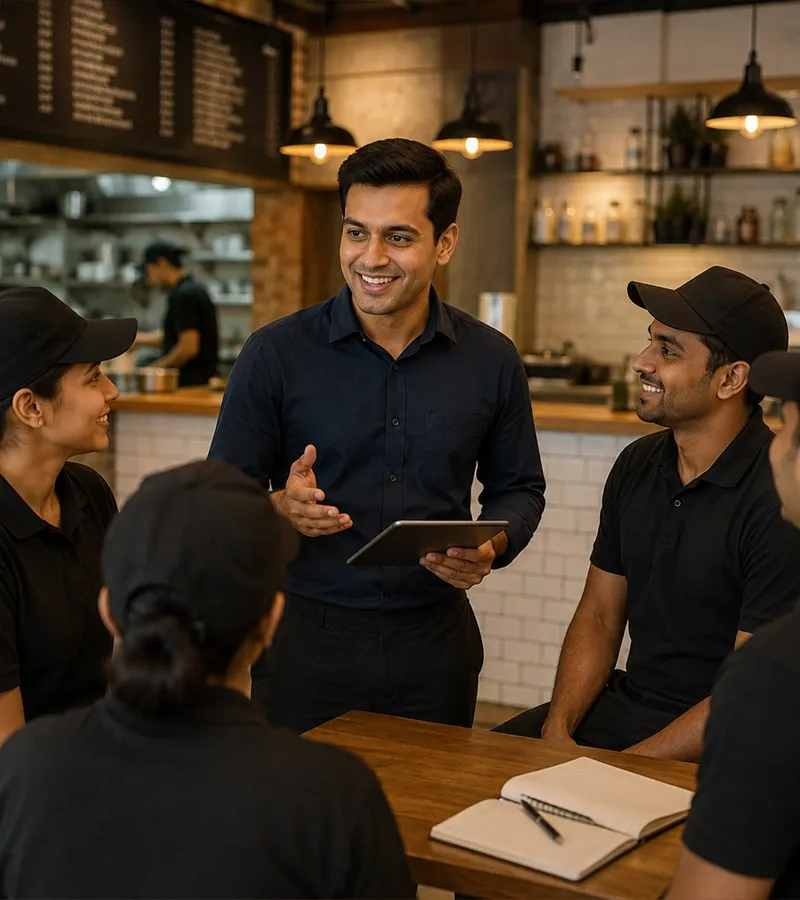
Control food cost before it controls you.
Food cost percentage is the most actionable metric in a fast casual business — and the one most commonly managed reactively rather than proactively. The chains that maintain tight food cost control do so through recipe costing, ingredient-level inventory, and variance reporting that triggers action before end-of-period surprises. They also centralise purchasing, which provides both negotiating leverage with suppliers and real-time visibility into what is being consumed. A 2-point improvement in food cost percentage across a 20-outlet chain is not a marginal gain. At scale, it is material.
Map your food cost levers →
Make your menu a commercial instrument, not a creative catalogue.
The most successful fast casual menus are short, engineered, and actively managed. Every item has a known margin. High-margin, high-volume items are given prominence. Low-margin items are repriced or removed. The menu is updated in response to data, not in response to what the head chef feels like offering this season. At scale, menu management also means pricing control across clusters and aggregator platforms — and the ability to run a promotion, update a price, or launch a new item across every outlet and channel simultaneously, not in sequence.
Review your menu engineering →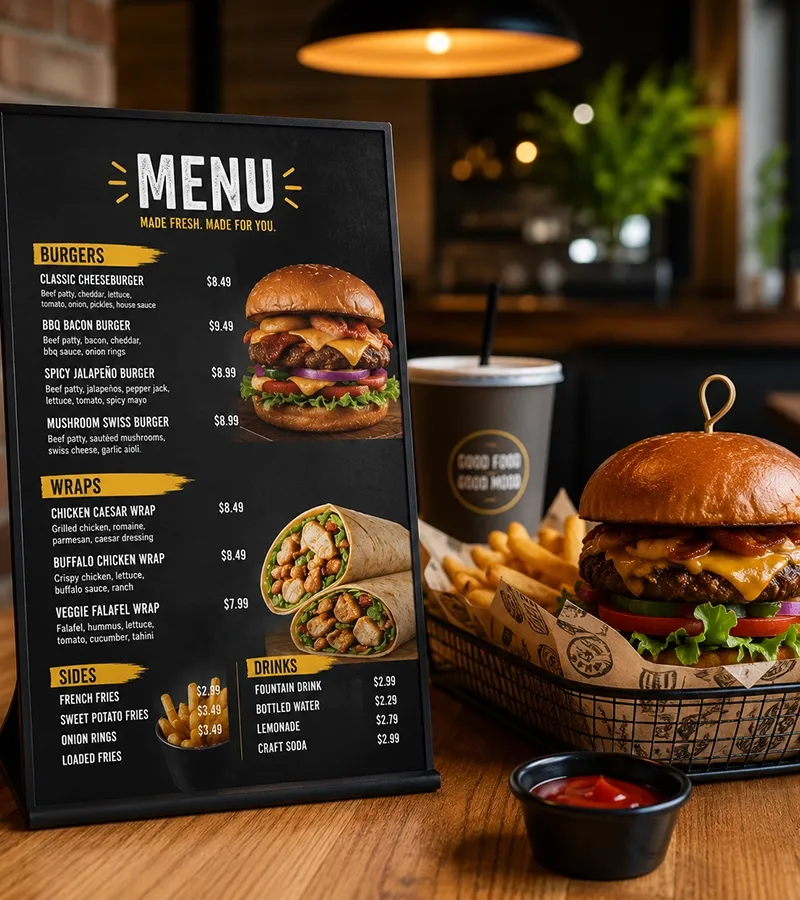
Turn data into decisions, not reports.
There is a meaningful difference between having data and being able to act on it. Most fast casual chains have data — buried in six systems, available after a 24-hour lag, and presented in a format that requires interpretation before it can drive action. The chains that use data as a competitive advantage have consolidated it into a single operational view, made it available in real time, and built their management cadence around it. A regional manager who can compare outlet performance live — revenue, food cost, void rate, delivery channel split — makes different decisions than one who is working from last week’s export.
Consolidate your reporting →
Build customer loyalty into the operation, not on top of it.
Loyalty programmes that are bolted onto a separate app and managed in a separate CRM are loyalty programmes that most customers will not bother with. The most effective loyalty mechanics in fast casual are invisible to the customer — they work at the point of sale, they accrue automatically across every channel, and they surface personalised offers in the moment rather than through a push notification that arrives three days later. Retention is cheaper than acquisition. At scale, a well-executed loyalty programme that increases average visit frequency by even 10–15% is a growth lever that requires no new locations, no new marketing spend, and no new menu items.
Plan your loyalty stack →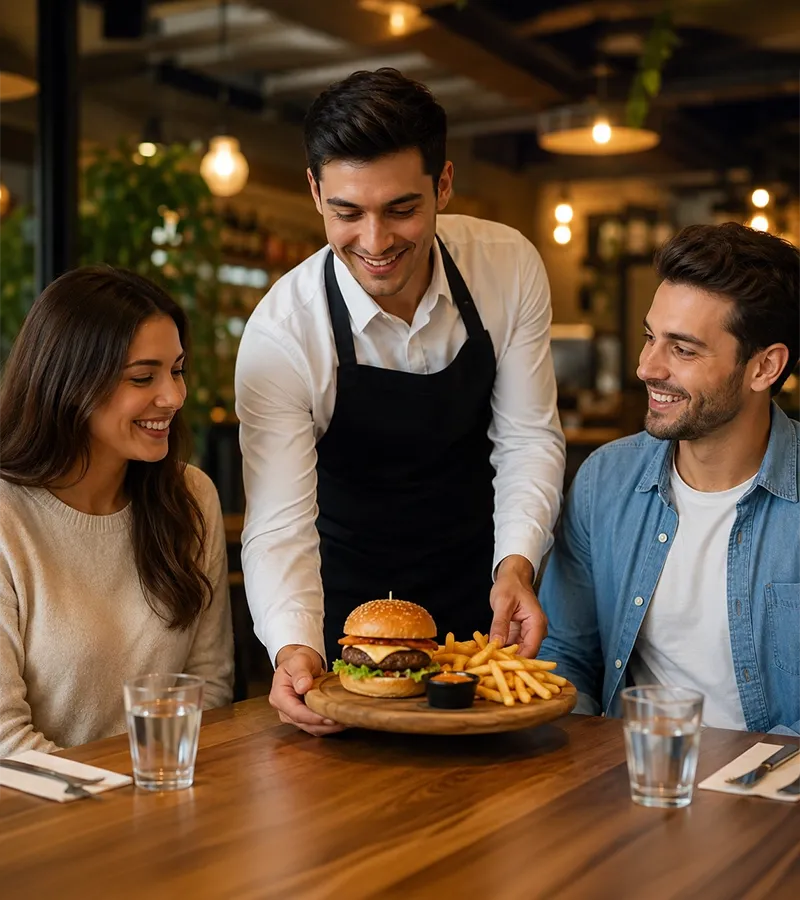
The thinking behind fast casual operations, unpacked.

How to Open a Casual Dining Restaurant: Licensing, Costs & Setup
A complete operational guide covering everything from location selection and licensing to menu planning, kitchen layout, and pre-opening staffing — the decisions that determine whether a new outlet opens smoothly or spends its first quarter recovering.
Read article →
Fast Food Restaurant Equipment: What Every Operator Needs to Know
A practical guide to the kitchen and front-of-house equipment decisions that define throughput, food quality, and maintenance cost — from POS hardware to cooking equipment, and what to prioritise when setting up or upgrading a fast casual operation.
Read article →
Hiring a Food Consultant: When It Makes Sense and What to Look For
The decision to bring in external expertise is one that scaling operators often make too late. This guide covers when a food consultant adds the most value, how to evaluate candidates, and what a productive engagement looks like for a growing fast casual brand.
Read article →Tell us where your chain is today. We’ll show you what’s possible.
This is not a product demo. It’s a 30-minute conversation with an operations specialist who works with fast casual chains at your stage of growth. No slide deck. No script. Just a focused diagnostic of your current operational setup and where the leverage points are.
Trusted by 30,000+ restaurants across 50+ countries

















































 G2 Leader·4.8★
 Best Restaurant POS·Gartner Digital Markets
 Capterra·4.8★